
A working wiki for Deadly Days: Roadtrip: backpack rules, extraction, survivors, bosses, modes, and the guides worth reading first.
Deadly Days Roadtrip Wiki: Systems, Builds, and Unlocks
Deadly Days: Roadtrip is a 2.5D pixel roguelite about driving a bus through a zombie apocalypse, looting every stop, and deciding when the risk stops being worth the reward. It launched out of Early Access on 29 October 2026 for PC at $14.99, with a 35% launch discount bringing it to $9.74. Pixelsplit developed it; Sidekick Publishing released it.
This page is the front door to the wiki. It explains the loop in the order the game teaches it, then points to the page that goes deep on each system.
Official source: Deadly Days: Roadtrip on Steam
More sources: Pixelsplit — Deadly Days: Roadtrip and Steam news hub.
The loop in one paragraph
You pick a survivor, drive to a procedurally generated stop, and loot. Loot fills a grid backpack. Kills drop yellow XP crystals, levels give you a free airdrop and a choice of items, and every stop hides fuel. Fill the bus gauge and you can leave; stay longer and the horde thickens, the night wave arrives, and a reaper starts hunting you. Reach the final stop, beat the boss, and the run ends. Spend the rewards at your base, unlock a new survivor or a permanent upgrade, and drive again.
The tension is not "can I kill zombies". It is "do I have room for this item, and do I have time to use it before the bus has to move".
The backpack is the build
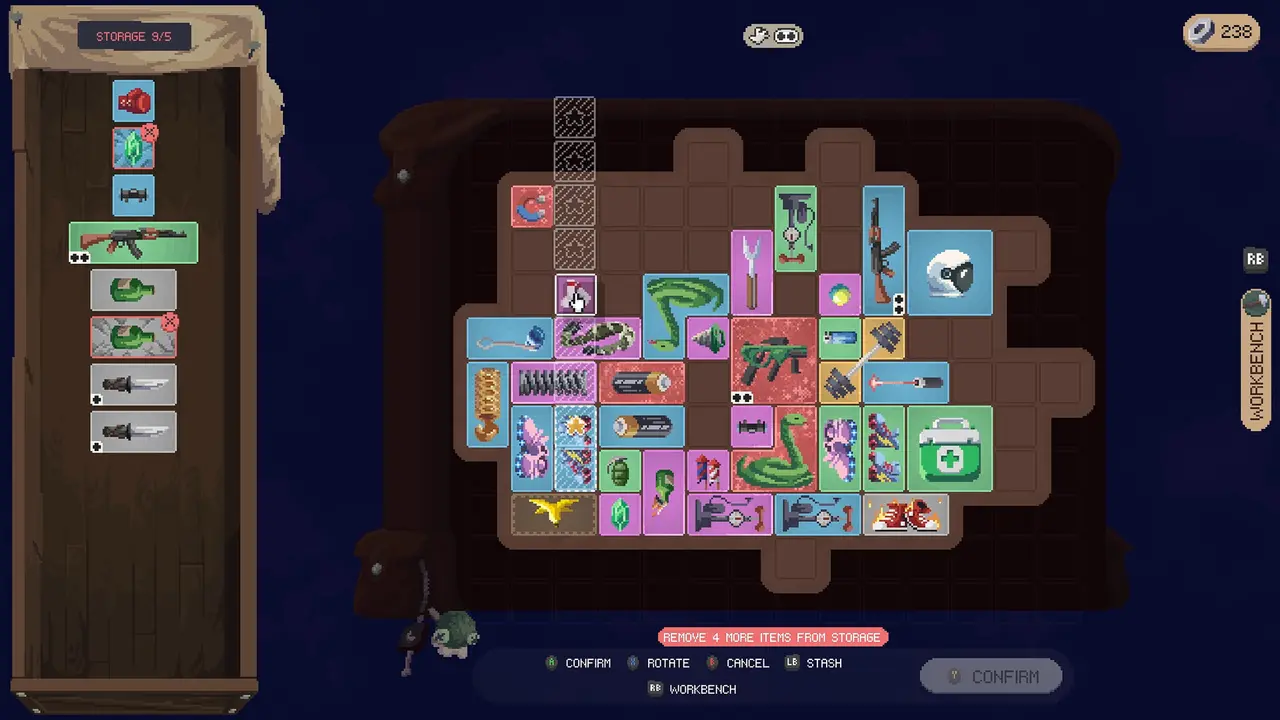
Every weapon and item occupies blocks in a grid. Two things matter more than raw stats:
- Adjacency. Items buff neighbours. A damage item placed beside a weapon is worth more than the same item in an empty corner.
- Shape. Weapons are not all one cell. A shotgun takes a wide footprint, a pistol takes less, and the spaces you leave decide what you can pick up later.
Duplicate items merge into higher rarities, and specific combinations craft into something new. The 1.0 build added ten weapons, five of which only exist through crafting, and sixteen items. That is why the backpack guide and the crafting guide are the two pages to read before chasing a tier list.
Fuel, extraction, and the decision that defines the genre
Each stage has a fuel target. Fuel comes from loot spots, from the ground, and occasionally from enemies. Once the gauge is full, the bus can leave. Nothing forces you to leave immediately — and that is the trap. Extra time means extra XP, extra crates, and extra chances at a legendary, but also a higher threat level and a night wave that does not care about your build.
Extraction is a real decision with a real cost. The extraction guide covers route ordering, when a detour is worth it, and the signals that a stage has turned from farm to funeral.
Fuel is the only resource that ends a stage. If a merchant is selling something you want, check the gauge first; buying a great item with 80% fuel and no safe route left is how good runs die.
Survivors change the rules, not just the numbers
The roster is built around character items: a signature object that only that survivor starts with and that defines their playstyle. The Vampire begins with no weapon at all, only a growing swarm of life-stealing bats. The Carver plants pumpkin turrets that fire when other items trigger. Penny the Clown throws a homing balloon. Bushy roots enemies with trap seeds. Santa calls airstrikes that leave gifts.
Ten-plus survivors are in the retail build, and several are hidden behind achievements or map events. The characters guide lists what is confirmed, and the character tier list ranks them for a first clear rather than for a perfect run.
Biomes, bosses, and the HQ finale
A run crosses biomes rather than a single map: meadow and fields, mountains, sands, snowy peaks, coast, canyon, and the suburbs, plus the MKing headquarters. Each biome has a signature enemy that replaces a base type — the Firefighter in the Sands, the Chiller in the Snowy Peaks, the Yodler in the Meadow, the Farmer in the Mountains, the Vacationeer on the Coast. Events such as the Labyrinth, the Highway Blockade, the Pumpkin Patch, and the Space Shuttle appear as marked stops.
Bosses close out a route. Franky, Ballerina, Dumpling, Blob Ball, Mr. Kyde, and Laz all have distinct arena patterns, and the 1.0 update added the fifth final boss, Laz, a mutated IT technician with a stolen restaurant robot army. The boss guide breaks down the tells.
The endgame is the Headquarter Run: collect bomb parts, assemble the bomb at your base, infiltrate MKing HQ across a multi-stage assault, beat the CEO, and blow the building up. Preparing that run raises the MKing Response Level, which raises difficulty up to level 6. It is the closest thing the game has to a campaign finale.
Modes worth knowing
- Standard run. The main route, with base progression and survivor unlocks.
- Weekly Challenge. Everyone gets the same random survivor and the same modifiers, and the leaderboard is the point. See the weekly challenge guide.
- Endless Mode. The build keeps scaling after the normal ending; the endless guide covers the breakpoints.
- Co-op. Couch split-screen or Steam Remote Play Together, with a friend who does not need to own the game. One player needs a controller. Cross-backpack synergies are the reason to read the co-op guide before starting.
What the 1.0 build actually changed
The full release, titled "LOOT & SHOOT", added the Vampire, the Laz boss, the coffee stand, 30+ achievements, new maps, a reworked tutorial, and a long list of quality-of-life fixes: Auto Equip that respects synergies, crit tiers above 100%, end-of-day hammer upgrades, and ranged weapons that now fire at their stated rate instead of being capped by frame rate. Old Early Access saves carry over.
If you are returning after months away, read the tips and tricks page; it covers the changes that invalidate old habits, including the new crit tiers and the reworked merchant rules.
Where to start
- Read the beginner guide for the first three runs.
- Read the backpack guide once you have lost a run to bad space management.
- Pick a build from the best builds page or look up a specific weapon in the weapon tier list.
- Use the items list when a tooltip is unclear.
- Check the codes page for redeemable extras, and the duct tape guide when you are short on unlocks.
FAQ
Is there an official English wiki? No. The only other wiki at launch is a German Fandom project still under construction. This site is independent and English-first.
How long is a run? A standard run is built from several stages and usually takes 30 to 60 minutes once you know the systems. A first run with pauses and reading will take longer.
Does co-op need two copies? No. Couch co-op is local, and Remote Play Together streams the second player in. One participant needs a controller.
Is the game on console? At the time of writing the Steam build is Windows-only. There is no Mac, Linux, or console release listed.
Related
More Deadly Days: Roadtrip Guides
How Deadly Days: Roadtrip co-op works: couch split-screen, Remote Play Together, controller needs, cross-backpack synergies and shared-run roles.
Deadly Days: Roadtrip codes checked for the 1.0 build: how to redeem, which strings are confirmed, which are community reports, and the scams to avoid.
How crafting works in Deadly Days: Roadtrip: duplicate merging, confirmed recipes, the five craft-only 1.0 weapons, and when to hammer an item.
What duct tape unlocks in Deadly Days: Roadtrip, the reliable sources (bosses, reaper, achievements), and the order worth spending it in.
How Endless Mode scales in Deadly Days: Roadtrip, which builds survive the curve, and the item priorities that stop a finished run from falling over.
The extraction decision in Deadly Days: Roadtrip: reading the fuel gauge, threat level, dusk timing, reaper risk, and the math of one more crate.
A working list of Deadly Days: Roadtrip items: support, trigger, mobility, sustain, cursed merchant goods and character items, with what each one does.
How legendary loot works in Deadly Days: Roadtrip: rarity, merging, glowing crates, the radar, boss drops, and the fastest ways to farm high-rarity gear.